
Introduction
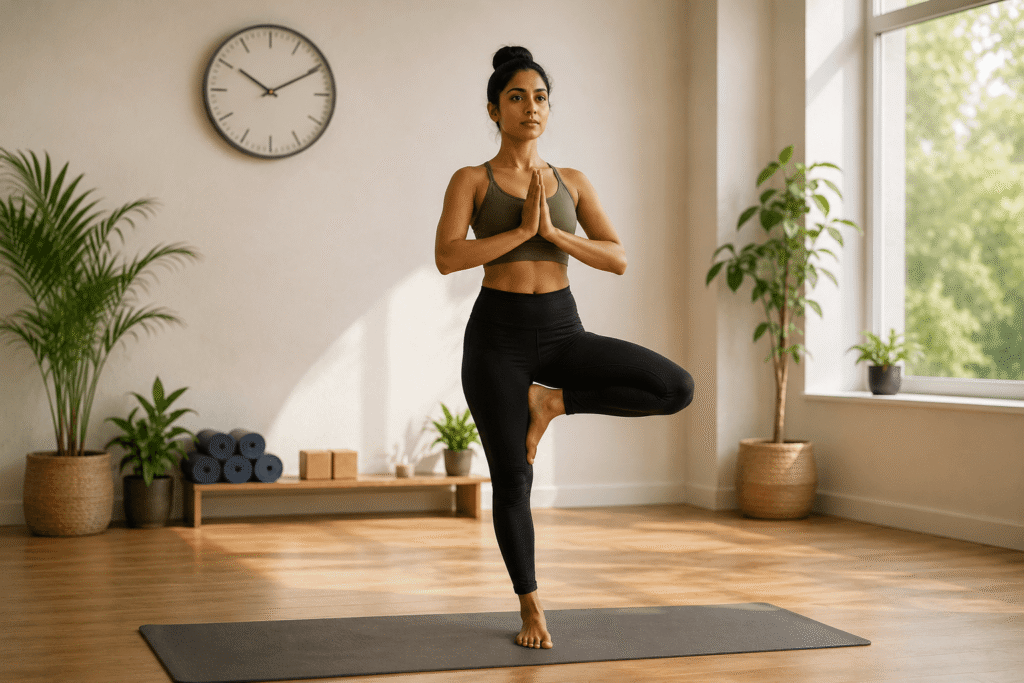
One of the most common questions beginners ask is how long should you hold each yoga pose to experience the best results. While yoga is not about perfection or competition, holding each pose for the right amount of time helps improve flexibility, strength, balance, and relaxation.
Some yoga poses are designed to be held for only a few breaths, while others are intended to be maintained for a minute or longer. The ideal duration depends on your experience level, the style of yoga you practice, and your personal fitness goals.
Whether you are practicing yoga to improve flexibility, reduce stress, build strength, or simply relax, understanding the right pose duration can make your practice more effective and enjoyable.
In this beginner-friendly guide, you’ll learn:
- How long beginners should hold yoga poses
- Why pose duration matters
- Recommended hold times for common yoga poses
- Mistakes to avoid
- Tips for improving your yoga practice safely
Why Holding Yoga Poses Matters
Holding a yoga pose for the appropriate amount of time allows your body and mind to experience the full benefits of the posture. Instead of rushing through movements, staying in a pose with steady breathing helps activate muscles, improve posture, and increase body awareness.
If you’re completely new to yoga, start with our Yoga for Beginners: Simple Poses to Start Safely.
Benefits include:
- Improves flexibility
- Builds muscular strength
- Enhances balance
- Increases concentration
- Reduces stress
- Encourages mindful breathing
- Improves posture
- Supports relaxation
Even holding a simple pose for an extra few breaths can significantly improve your yoga practice over time.
How Long Should Beginners Hold Each Yoga Pose?
For most beginners, the recommended time is 15 to 30 seconds, or approximately 3 to 5 slow, deep breaths.
This gives your muscles enough time to engage without creating unnecessary strain.
As your flexibility and strength improve, you can gradually increase the hold time to 45–60 seconds for many poses.
If you’re wondering how many days you should practice each week, read How Often Should Beginners Practice Yoga?
Remember:
✔ Never force your body.
✔ If you feel pain, slowly come out of the pose.
✔ Focus on smooth breathing instead of counting seconds.
Consistency is far more important than holding poses for a long time.
Factors That Affect Yoga Pose Duration
Every person’s yoga journey is different. Several factors determine how long you should stay in a pose.
1. Experience Level
Beginners should hold poses for shorter periods while learning proper alignment.
Intermediate and advanced practitioners may safely remain in certain poses longer.
2. Yoga Style
Different yoga styles recommend different holding times.
For example:
- Vinyasa Yoga moves quickly from one pose to another.
- Hatha Yoga usually holds poses longer.
- Yin Yoga encourages holding poses for several minutes.
Choose a style that matches your goals and experience.
3. Personal Goals
Your purpose for practicing yoga also influences pose duration.
If your goal is:
Flexibility
Hold gentle stretching poses slightly longer while breathing comfortably.
Strength
Maintain standing and balancing poses with proper form.
Relaxation
Spend more time in calming poses such as Child’s Pose or Legs Up the Wall.
4. Comfort and Breathing
Your breath is one of the best indicators of whether you should remain in a pose.
If your breathing becomes strained or you feel sharp pain, slowly release the posture.
Yoga should feel challenging but never painful.
Controlled breathing makes it easier to stay in each pose. Learn these Breathing Exercises (Pranayama) for Anxiety Relief.
General Rule for Beginners
A simple guideline is:
- Standing poses: 20–30 seconds
- Seated poses: 30–45 seconds
- Gentle stretches: 30–60 seconds
- Relaxation poses: 1–5 minutes
Always prioritize correct alignment and steady breathing over holding a pose for longer.
How Long Should You Hold Each Yoga Pose?
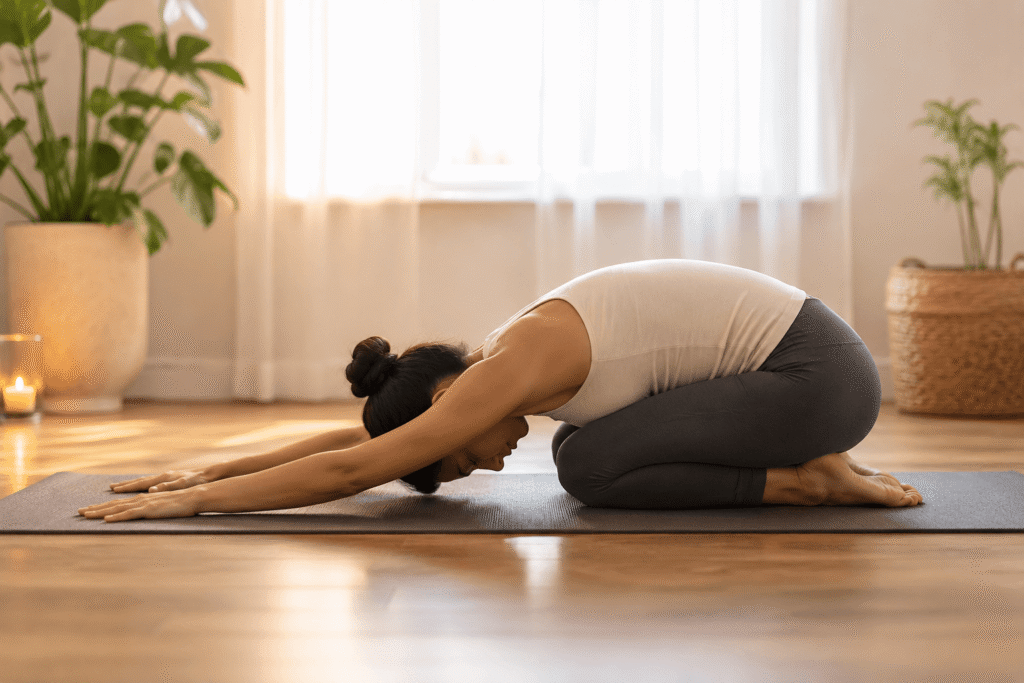
The following table provides a simple guideline for beginners. These durations are flexible, so always listen to your body and breathe comfortably throughout each pose.
| Yoga Pose | Beginner Hold Time | Benefits |
|---|---|---|
| Mountain Pose (Tadasana) | 20–30 seconds | Improves posture and balance |
| Tree Pose (Vrikshasana) | 20–30 seconds | Builds balance and concentration |
| Downward Facing Dog | 20–30 seconds | Stretches the whole body |
| Child’s Pose (Balasana) | 1–3 minutes | Relaxes the body and mind |
| Cat-Cow Stretch | 5–10 slow breaths | Improves spinal flexibility |
| Cobra Pose (Bhujangasana) | 15–20 seconds | Strengthens the back |
| Bridge Pose | 20–30 seconds | Builds core and glute strength |
| Warrior I | 20–30 seconds | Improves leg strength |
| Warrior II | 20–30 seconds | Enhances balance and endurance |
| Triangle Pose | 20–30 seconds | Improves flexibility |
| Seated Forward Bend | 30–60 seconds | Stretches the hamstrings |
| Butterfly Pose | 30–60 seconds | Opens the hips |
| Legs Up the Wall | 3–5 minutes | Reduces leg fatigue and stress |
| Corpse Pose (Savasana) | 5–10 minutes | Deep relaxation and recovery |
| Easy Pose (Meditation) | 3–10 minutes | Improves focus and mindfulness |
Should You Count Seconds or Breaths?
Many yoga teachers recommend counting breaths instead of seconds.
For beginners:
- Hold each pose for 3–5 slow, deep breaths.
- Breathe naturally without holding your breath.
- Let your breath guide your movement.
Focusing on breathing makes your practice calmer and more mindful than watching a timer.
Pair these poses with our guide on Yoga for Better Sleep Naturally for deeper relaxation.
Different Yoga Styles and Pose Duration
Not all yoga styles use the same pace. Here’s a comparison:
| Yoga Style | Typical Hold Time |
|---|---|
| Vinyasa Yoga | 1–3 breaths |
| Hatha Yoga | 20–60 seconds |
| Yin Yoga | 2–5 minutes |
| Restorative Yoga | 5–15 minutes |
| Power Yoga | 15–30 seconds |
If you’re a beginner, Hatha Yoga is often a good place to start because it allows enough time to learn proper alignment without rushing.
How Long Should You Hold Each Yoga Pose Without Overdoing It
Learning yoga takes patience. Avoid these common mistakes:
1. Holding Poses Too Long
Many beginners think longer is always better. In reality, staying in a pose beyond your comfort level can lead to muscle strain or poor alignment.
2. Forgetting to Breathe
Your breath should remain slow and steady throughout each pose. Holding your breath creates unnecessary tension.
3. Comparing Yourself to Others
Every body is different. Focus on your own progress rather than trying to match someone else’s flexibility or endurance.
4. Ignoring Pain
Stretching is normal, but sharp or intense pain is not. If you experience pain, gently come out of the pose and adjust your position.
5. Rushing Through the Practice
Moving too quickly between poses reduces the effectiveness of your practice. Take your time and transition mindfully.
If your goal is deep relaxation and better sleep, practicing Yoga Nidra for Beginners after your yoga session can help calm the mind, reduce stress, and support overall well-being.
How Long Should You Hold Each Yoga Pose Safely?
These simple habits can help you get more from every session:
Warm Up First
Spend 5–10 minutes warming up with gentle movements before attempting deeper stretches.
Focus on Alignment
Correct posture is more important than how long you hold a pose. Proper alignment helps prevent injuries and improves results.
Stay Consistent
Practicing yoga regularly, even for 15–20 minutes a day, is more beneficial than occasional long sessions.
Use Yoga Props
Blocks, straps, cushions, or folded blankets can make poses more comfortable and help you maintain good form.
Listen to Your Body
Your body gives valuable feedback. If a pose feels too difficult, modify it or shorten the hold time.
Frequently Asked Questions (FAQs)
1. How long should beginners hold a yoga pose?
Beginners should generally hold each yoga pose for 15–30 seconds, or about 3–5 slow breaths. As flexibility and strength improve, you can gradually increase the duration while maintaining proper alignment and comfortable breathing.
2. Is it better to hold yoga poses longer?
Not always. Holding a pose longer can improve flexibility and endurance, but only if you maintain proper form. Quality is more important than duration. If you feel pain or lose alignment, gently release the pose.
3. Which yoga poses should be held the longest?
Relaxation and restorative poses are usually held longer, including:
- Child’s Pose (1–3 minutes)
- Legs Up the Wall (3–5 minutes)
- Corpse Pose (5–10 minutes)
These poses help relax the nervous system and support recovery.
4. Should I count seconds or breaths?
Counting slow, deep breaths is often more natural than counting seconds. Aim for 3–5 breaths for most beginner poses to stay relaxed and focused.
5. Can I practice yoga every day?
Yes. Daily yoga is safe for most healthy adults when you listen to your body, use proper technique, and include rest when needed. Even 15–20 minutes a day can improve flexibility, posture, and overall well-being.
6. What should I do if a pose feels uncomfortable?
A gentle stretch is normal, but sharp pain is not. If a pose feels painful:
- Ease out of the posture slowly.
- Adjust your alignment.
- Use props such as blocks or straps if needed.
- Never force your body into a position.
When Should You Increase the Hold Time?
As your flexibility, strength, and confidence improve, you can gradually increase how long you hold each yoga pose. Extend most beginner poses from 20–30 seconds to 45–60 seconds while maintaining proper alignment and steady breathing. Always increase hold times gradually and stop if you feel pain or discomfort.
Conclusion
Knowing how long to hold each yoga pose is an important part of building a safe and effective yoga practice. For beginners, holding most poses for 15–30 seconds or 3–5 slow breaths is a great starting point. As your confidence and flexibility grow, you can gradually increase the duration without compromising your form.
Remember, yoga is a personal journey. Instead of comparing yourself with others, focus on steady progress, mindful breathing, and consistency. Whether your goal is better flexibility, reduced stress, improved strength, or greater relaxation, practicing regularly with proper technique will help you enjoy the long-term benefits of yoga.
Start with a few simple poses, listen to your body, and make yoga a part of your healthy daily routine.
Regular physical activity, including yoga, supports overall physical and mental health. The World Health Organization recommends staying physically active for better overall well-being.
Regular practice improves flexibility, balance, and emotional well-being. Learn more in Benefits of Yoga for Mental Health.
Ready to build a consistent yoga habit? Explore our beginner yoga guides and start practicing safely, one pose at a time.