
Yoga for nervous system regulation can be a gentle way to support relaxation, reduce stress, and help the body return to a calmer state.
In today’s fast-paced world, many people experience stress, anxiety, mental fatigue, and emotional imbalance. Constant pressure from work, family responsibilities, technology, and daily challenges can keep the nervous system in a state of alertness. Over time, this may lead to poor sleep, mood swings, headaches, fatigue, and other health issues.
Yoga is one of the most effective natural practices for calming the nervous system. Through gentle movements, controlled breathing, and mindfulness, yoga helps the body shift from a stressed state to a relaxed and balanced state. Regular yoga practice can reduce stress hormones, improve emotional well-being, and support overall health.
In this article, you will learn how yoga calms the nervous system naturally, its benefits, the best yoga poses to practice, and simple breathing techniques for relaxation.
If stress and anxiety are affecting your daily life, read our guide on Yoga for Stress and Anxiety Relief to learn more relaxation techniques.
What Is the Nervous System?
The nervous system is the body’s communication network. It controls movement, breathing, heart rate, digestion, emotions, and reactions to stress.
There are two main parts of the autonomic nervous system:
1.Sympathetic Nervous System
Often called the “fight-or-flight” system, it prepares the body to respond to stress or danger by:
- Increasing heart rate
- Raising blood pressure
- Releasing stress hormones
- Increasing alertness
2.Parasympathetic Nervous System
Known as the “rest-and-digest” system, it helps the body relax and recover by:
- Slowing the heart rate
- Supporting digestion
- Reducing stress hormones
- Promoting calmness and relaxation
Yoga may help support the parasympathetic nervous system, allowing the body and mind to relax.
How Yoga Calms the Nervous System
Reduces Stress Hormones
Stress causes the body to release cortisol and adrenaline. High levels of these hormones can contribute to anxiety, sleep problems, and fatigue.
Yoga encourages relaxation and lowers cortisol levels, helping the body feel calmer and more balanced.
Improves Breathing Patterns
Many people take short, shallow breaths when stressed.
Yoga teaches slow and controlled breathing, which sends calming signals to the brain and nervous system.
Relaxes Muscle Tension
Stress often causes tightness in the neck, shoulders, back, and jaw.
Gentle yoga stretches release physical tension, helping the body enter a relaxed state.
Enhances Mindfulness
Yoga encourages awareness of the present moment.
This helps reduce overthinking, worry, and mental distractions that can overstimulate the nervous system.
Benefits of Yoga for the Nervous System
Regular yoga practice offers many benefits, including:
- Reduces stress and anxiety
- Improves sleep quality
- Enhances emotional balance
- Lowers blood pressure
- Increases mental clarity
- Improves concentration
- Reduces muscle tension
- Supports overall well-being
- Promotes relaxation and calmness
For additional stress-management techniques, read our article on Stress Relief Yoga Routine.
Best Yoga Poses to Calm the Nervous System
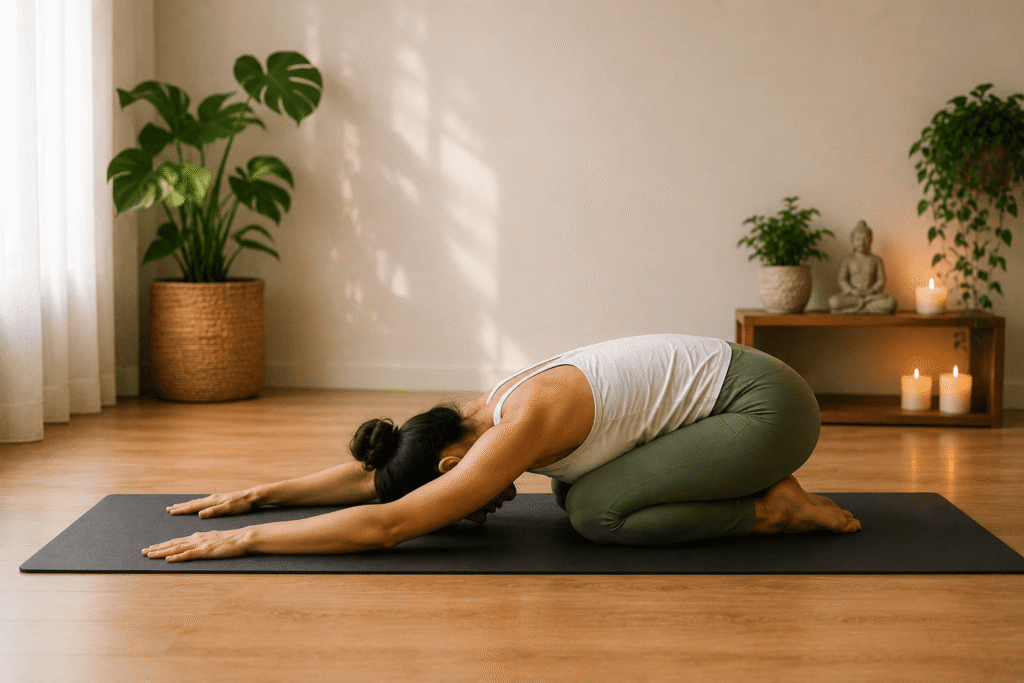
1. Child’s Pose (Balasana)
Child’s Pose is a gentle resting pose that helps relax the body and quiet the mind.
Benefits
- Relieves stress
- Calms the nervous system
- Releases tension in the back and shoulders
- Promotes deep relaxation
How to Practice
- Kneel on the floor.
- Sit back on your heels.
- Stretch your arms forward.
- Rest your forehead on the mat.
- Hold for 1–3 minutes while breathing deeply.
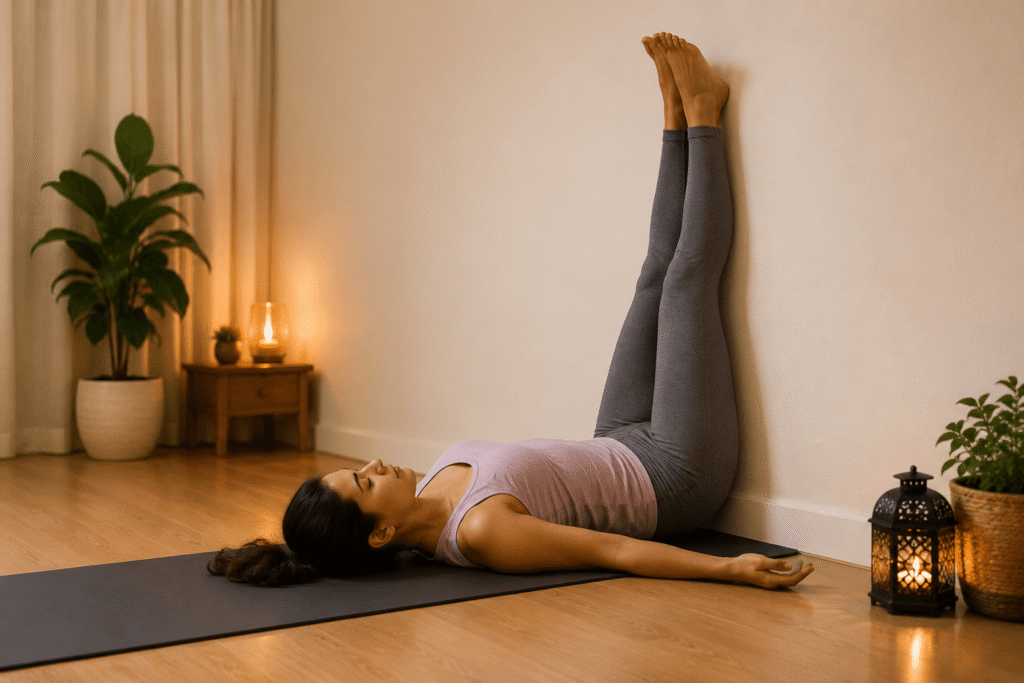
2. Legs Up the Wall Pose (Viparita Karani)
This restorative pose helps reduce fatigue and calm the mind.
Benefits
- Relaxes the nervous system
- Improves circulation
- Reduces stress and anxiety
- Encourages relaxation
How to Practice
- Sit next to a wall.
- Lie on your back.
- Extend your legs up the wall.
- Relax your arms by your sides.
- Stay for 5–10 minutes.
3.Cat-Cow Stretch
This gentle movement improves spinal flexibility and releases tension.
Benefits
- Relaxes the body
- Improves breathing
- Reduces stress
- Enhances body awareness
How to Practice
- Begin on hands and knees.
- Inhale and arch your back (Cow Pose).
- Exhale and round your spine (Cat Pose).
- Continue slowly for 1–2 minutes.
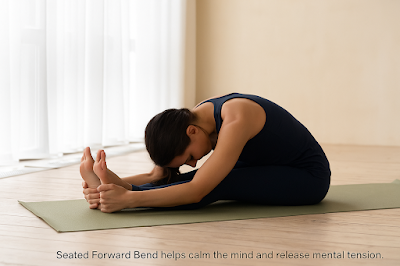
4. Seated Forward Bend
This calming posture stretches the spine and encourages relaxation.
Benefits
- Calms the mind
- Relieves stress
- Reduces fatigue
- Promotes relaxation
How to Practice
- Sit with your legs extended.
- Slowly fold forward.
- Reach toward your feet.
- Hold for 30–60 seconds.
5. Corpse Pose (Savasana)
Savasana is one of the best yoga poses for nervous system recovery.
Benefits
- Deep relaxation
- Stress relief
- Mental calmness
- Improved nervous system function
How to Practice
- Lie flat on your back.
- Relax your entire body.
- Close your eyes.
- Focus on your breath.
- Stay for 5–10 minutes.
Breathing Exercises for Nervous System Relaxation
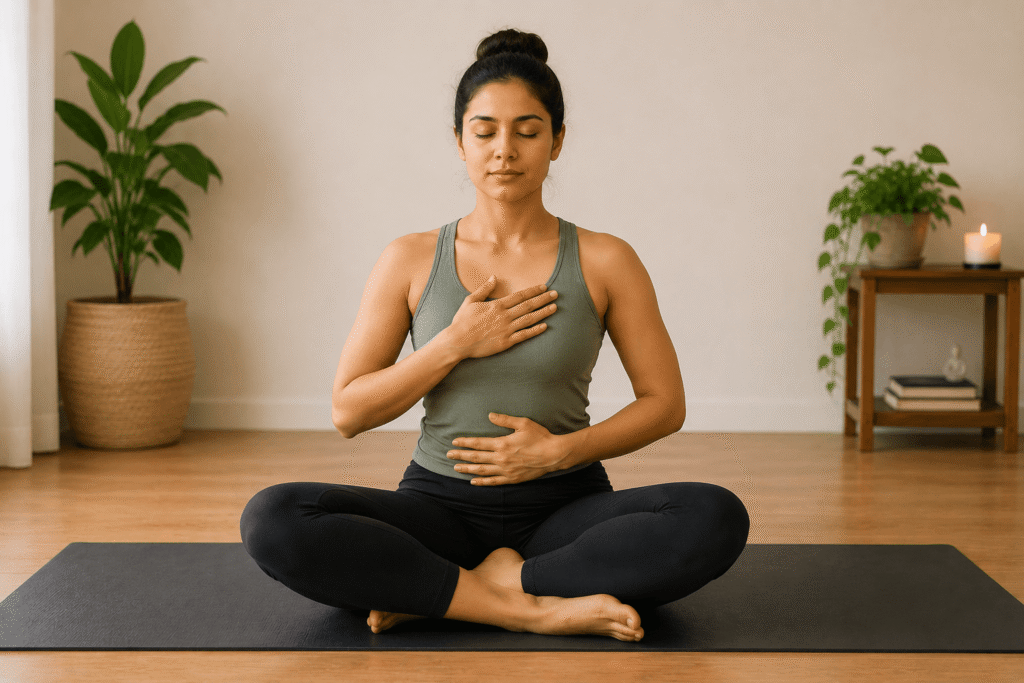
Deep Belly Breathing
Deep breathing activates the parasympathetic nervous system and reduces stress.
According to the World Health Organization (WHO), managing stress is important for maintaining overall physical and mental well-being.
Steps
- Sit comfortably.
- Place one hand on your belly.
- Inhale slowly through your nose.
- Feel your belly expand.
- Exhale gently through your nose.
- Repeat for 5 minutes.
Alternate Nostril Breathing
This traditional breathing exercise promotes balance and calmness.
Benefits
- Reduces anxiety
- Improves focus
- Supports nervous system balance
Practice for 3–5 minutes daily.
You can also practice a simple Morning Yoga Routine for Mental Health to improve focus, reduce stress, and support emotional balance throughout the day.
Daily Tips to Support Nervous System Health
Along with yoga, these habits can help:
- Get enough sleep
- Stay hydrated
- Practice meditation
- Spend time outdoors
- Limit screen time before bed
- Maintain a healthy diet
- Practice gratitude and mindfulness
Consistency is more important than intensity. Even 10–15 minutes of yoga daily can make a significant difference.
Conclusion
Yoga is a natural and effective way to calm the nervous system and improve overall well-being. Through gentle movements, breathing exercises, and mindfulness, yoga helps reduce stress, relax muscles, improve sleep, and restore emotional balance.
Whether you are dealing with anxiety, mental fatigue, or everyday stress, incorporating yoga into your daily routine can support a healthier and calmer nervous system. Start with a few simple poses and breathing techniques, and gradually make yoga a regular part of your lifestyle.
If you want to relax more deeply and improve sleep quality, check out our Yoga for Better Sleep Naturally (Easy Bedtime Routine) guide.
Frequently Asked Questions (FAQ)
Can yoga really calm the nervous system?
Yes. Yoga activates the parasympathetic nervous system, helping the body relax and recover from stress naturally.
How often should I practice yoga for stress relief?
Practicing yoga for 10–30 minutes daily can provide noticeable benefits for stress management and relaxation.
Which yoga pose is best for calming the nervous system?
Child’s Pose, Legs Up the Wall, and Corpse Pose are among the most effective poses for relaxation.
Can yoga help reduce anxiety?
Yes. Yoga combines movement, breathing, and mindfulness, which can help reduce anxiety and promote emotional balance.
Is yoga safe for beginners?
Absolutely. Gentle yoga poses and breathing exercises are suitable for beginners of all ages.