
Should you do yoga before or after walking? For most beginners, gentle yoga after walking is a good choice for improving flexibility and relaxing the body. However, a few gentle yoga movements before walking can help you warm up and move comfortably.
The best order depends on your fitness goals:
- Yoga before walking: Choose gentle movements to warm up your body and loosen stiff muscles.
- Yoga after walking: Practise gentle stretches and relaxing poses when your muscles are warm.
- For beginners: Start with a comfortable walk, followed by 5–10 minutes of gentle yoga, and adjust the routine to suit your body.
In this guide, you’ll learn when to practise yoga before or after walking, the benefits of each approach, and how to combine both activities in a simple daily routine.
Should I Walk or Do Yoga First?
The answer depends on your fitness goals. If you want to warm up your body, yoga before walking can prepare your muscles. If your goal is flexibility and relaxation, yoga after walking is usually the better option.
In this guide, you’ll learn the benefits of both approaches, when to choose each one, and how to combine yoga and walking for maximum health benefits.
If you’re new to combining yoga with walking, starting with the right routine makes a big difference. You may also enjoy our guide on Morning Yoga Routine for Beginners at Home, which includes simple poses to prepare your body for daily exercise.
Why Combine Yoga and Walking?
In addition, Walking strengthens your heart, lungs, and leg muscles.
Yoga improves flexibility, balance, posture, and mindfulness.
Together, they support overall health.
- Improve overall fitness
- It also helps reduce stress.
- Increase flexibility
- Support healthy joints
- In addition, regular practice improves posture.
- Boost energy levels
- Help maintain a healthy weight
- Reduce muscle stiffness
Instead of choosing one over the other, combining both creates a complete fitness routine suitable for almost everyone.
Walking is one of the easiest ways to stay active and improve overall health. According to the World Health Organization (WHO), adults should engage in regular physical activity to reduce the risk of heart disease, diabetes, and other chronic conditions. Combining walking with yoga helps support both physical and mental well-being.
Benefits of Doing Yoga Before Walking
Practicing gentle yoga before walking prepares your body for movement.
1. Warms Up Your Muscles
Light stretching increases blood flow and reduces stiffness before your walk.
2. Improves Walking Posture
Yoga helps align your spine, shoulders, and hips, making walking more comfortable.
3. Activates Core Muscles
A stronger core improves balance and walking efficiency.
4. Increases Joint Mobility
Moving your hips, ankles, knees, and shoulders through yoga improves natural movement during your walk.
5. Helps You Walk More Comfortably
When your muscles are warm and flexible, walking feels easier and more enjoyable.
Choosing the right time to practice yoga can improve your overall experience. Learn more in our article on Best Time to Do Yoga: Morning vs Evening for Beginners to decide what works best for your schedule.
Best Yoga Poses Before Walking
Spend about 5–10 minutes doing gentle movements.
Cat-Cow Stretch
Loosens the spine and improves mobility.
Mountain Pose
Improves posture and body awareness.
Standing Side Stretch
Lengthens the sides of the body.
Gentle Forward Fold
Stretches the hamstrings gently.
Hip Circles
Improves hip flexibility.
Shoulder Rolls
Releases upper-body tension.
Avoid deep or intense stretches before walking because they may temporarily reduce muscle strength.
When practicing these poses, it’s important not to rush. Read our guide on How Long Should You Hold Each Yoga Pose? to understand the ideal duration for beginners.
Benefits of Doing Yoga After Walking
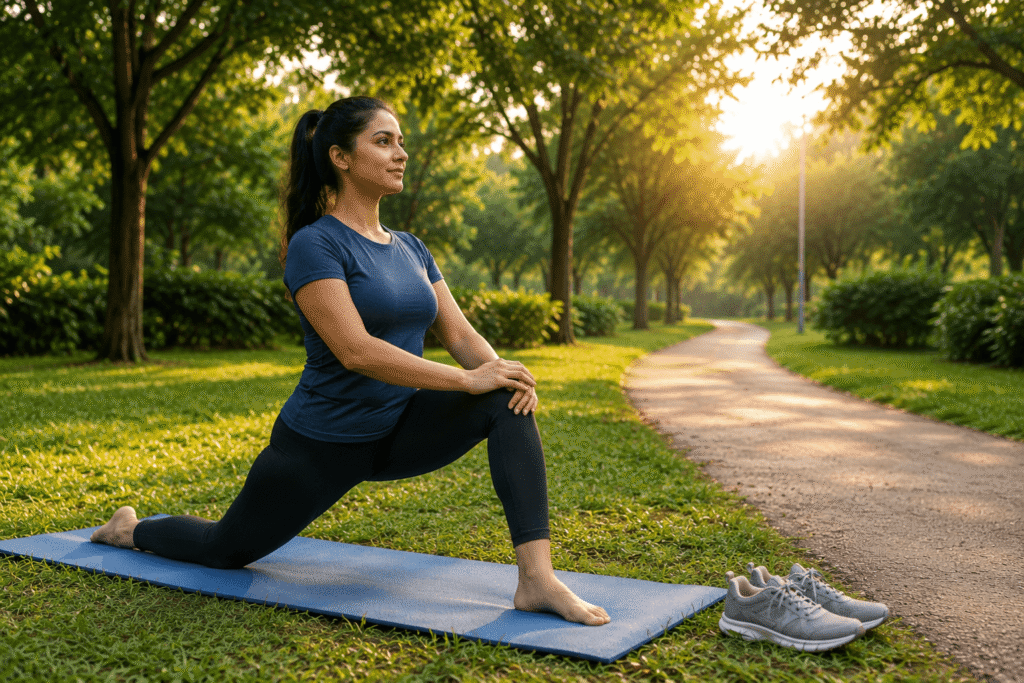
For many people, practicing yoga after walking can be a comfortable way to stretch while the muscles are warm.
Your muscles are already warm, making stretching safer and more effective.
1. Improves Flexibility
Warm muscles stretch more comfortably after exercise.
2. Reduces Muscle Tightness
Yoga helps release tension in the calves, thighs, hips, and lower back.
3. Supports Recovery
Gentle stretching improves circulation and helps muscles recover.
4. Calms the Mind
Ending your workout with yoga reduces stress and promotes relaxation.
5. Helps Prevent Stiffness
Regular stretching after walking keeps joints healthy and comfortable.
Regular walking supports cardiovascular fitness and overall health. The American Heart Association recommends walking as a simple and effective exercise for improving heart health. Following your walk with gentle yoga can further improve flexibility and aid muscle recovery.
Best Yoga Poses After Walking
These relaxing poses are ideal after a walk.
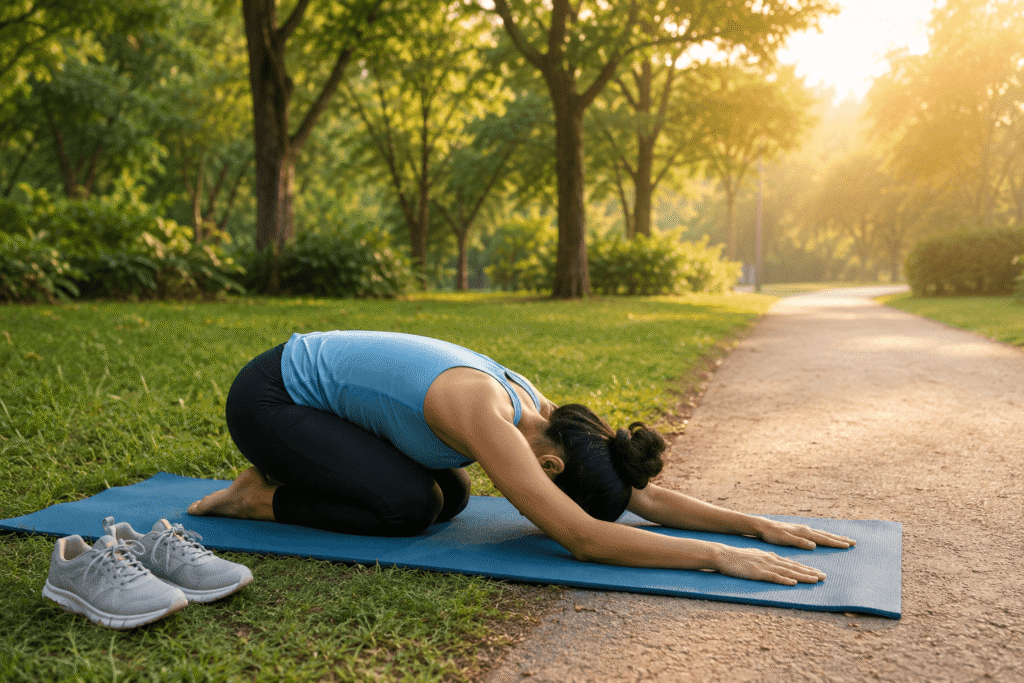
Child’s Pose
Relaxes the back, hips, and shoulders.
Downward-Facing Dog
Stretches calves, hamstrings, and spine.
Seated Forward Bend
Improves hamstring flexibility.
Butterfly Pose
Opens the hips gently.
Legs-Up-the-Wall Pose
Reduces tired legs and improves circulation.
Corpse Pose (Savasana)
Promotes complete relaxation.
Spend around 10–15 minutes stretching after your walk.
Yoga Before vs After Walking
| Yoga Before Walking | Yoga After Walking |
|---|---|
| Warms up muscles | Improves flexibility |
| Improves posture | Relaxes tight muscles |
| Activates the body | Supports recovery |
| Improves mobility | Helps reduce muscle tightness |
| Best for preparation | Best for relaxation |
Which Is Better?
The best option depends on your goal.
Choose Yoga Before Walking If You Want To:
- Warm up your body
- Improve posture
- Prepare stiff muscles
- Wake up in the morning
Choose Yoga After Walking If You Want To:
- Increase flexibility
- Reduce muscle tightness
- Relax your body
- Recover after exercise
For beginners, doing yoga after walking is usually the better choice because your muscles are already warm and stretching becomes easier and safer.
Sample Yoga and Walking Routines
Option 1
- 5 minutes gentle yoga
- 20 minutes brisk walking
- 5 minutes cool-down stretching
Option 2
- 30 minutes walking
- 15 minutes relaxing yoga
Both routines provide excellent health benefits.
Stretching after physical activity helps improve flexibility and maintain healthy joints. Harvard Health Publishing explains that regular stretching can increase range of motion and reduce muscle stiffness, making yoga an excellent complement to a daily walking routine.
Tips for Beginners
- Wear comfortable clothing.
- Stay hydrated before and after exercise.
- Walk at a comfortable pace.
- Never force a stretch.
- Breathe slowly throughout your yoga practice.
- Listen to your body and rest if needed.
- Practice consistently for the best results.
Proper nutrition is just as important as exercise. Before heading out for a walk or yoga session, read What Should You Eat Before and After Yoga? A Beginner’s Nutrition Guide for healthy meal and snack ideas.
Common Mistakes to Avoid
- Doing intense yoga before walking.
- Skipping your warm-up.
- Holding your breath during stretches.
- Walking immediately after deep relaxation without transitioning slowly.
- Ignoring pain or discomfort
Frequently Asked Questions
Can I do yoga and walking every day?
Yes. Both are low-impact activities that many people can safely practice daily.
Should I stretch before walking?
Yes, but choose gentle dynamic stretches rather than long, deep stretches.
Is yoga after walking better for weight loss?
Yoga itself doesn’t significantly increase calorie burn after walking, but it supports recovery, consistency, and overall wellness, which can help maintain a healthy lifestyle.
Can beginners combine yoga and walking?
Absolutely. They complement each other and are suitable for people of all ages and fitness levels.
How long should yoga be after walking?
Around 10–15 minutes of gentle stretching is enough for most beginners.
Consistency is more important than intensity. If you’re wondering how often you should combine yoga with walking, check out our guide on How Often Should Beginners Practice Yoga at Home? for a simple weekly plan.
Conclusion
So, should you practice yoga before or after walking?
Both options have benefits. Yoga before walking helps prepare your body, improve posture, and increase mobility. Yoga after walking enhances flexibility, reduces muscle tightness, and promotes relaxation.
For most beginners, walking first and practicing yoga afterward provides the greatest overall benefits. If you have extra time, combining a short warm-up before your walk with a relaxing yoga session afterward creates a balanced and enjoyable fitness routine.
The most important factor is consistency. Find a routine that fits your schedule and enjoy the long-term benefits of both yoga and walking.