
Yoga is more than stretching and breathing—it also works best when your body has the right fuel. Many beginners wonder whether they should eat before yoga, practice on an empty stomach, or wait until after the session.
The answer depends on the type of yoga, the time of day, and your personal comfort. Eating the right foods at the right time can improve your energy, focus, and recovery while helping you avoid discomfort during practice.
In this beginner-friendly guide, you’ll learn what to eat before and after yoga, which foods to avoid, and simple meal ideas to support your yoga routine.
If you’re new to yoga, start with our Yoga for Beginners: Simple Poses to Start Safely article.
Why Nutrition Matters for Yoga
Your body needs energy to move, balance, and maintain concentration during yoga practice. Proper nutrition can help you:
- Improve energy levels
- Support muscle recovery
- Stay hydrated
- Reduce fatigue
- Improve flexibility over time
- Maintain overall health
Whether you practice gentle yoga or a more active style, balanced nutrition helps you get the most from every session.
Eating a balanced diet rich in fruits, vegetables, whole grains, lean protein, and healthy fats supports overall health and helps fuel physical activity, including yoga. The World Health Organization (WHO) – Healthy Diet recommends choosing a variety of nutrient-rich foods and limiting highly processed foods, added sugars, and excess salt for long-term health.
Should You Eat Before Yoga?
Yes—but timing matters.
Many yoga teachers recommend practicing on a light stomach. A heavy meal before yoga may cause bloating, stomach discomfort, or sluggishness, especially during twists and forward bends.
If you’ve eaten a full meal
Wait about 2–3 hours before practicing yoga.
If you’re having a light snack
Wait 30–60 minutes before starting.
Morning yoga is often comfortable with only water or a light snack if you’re hungry.
Best Foods to Eat Before Yoga
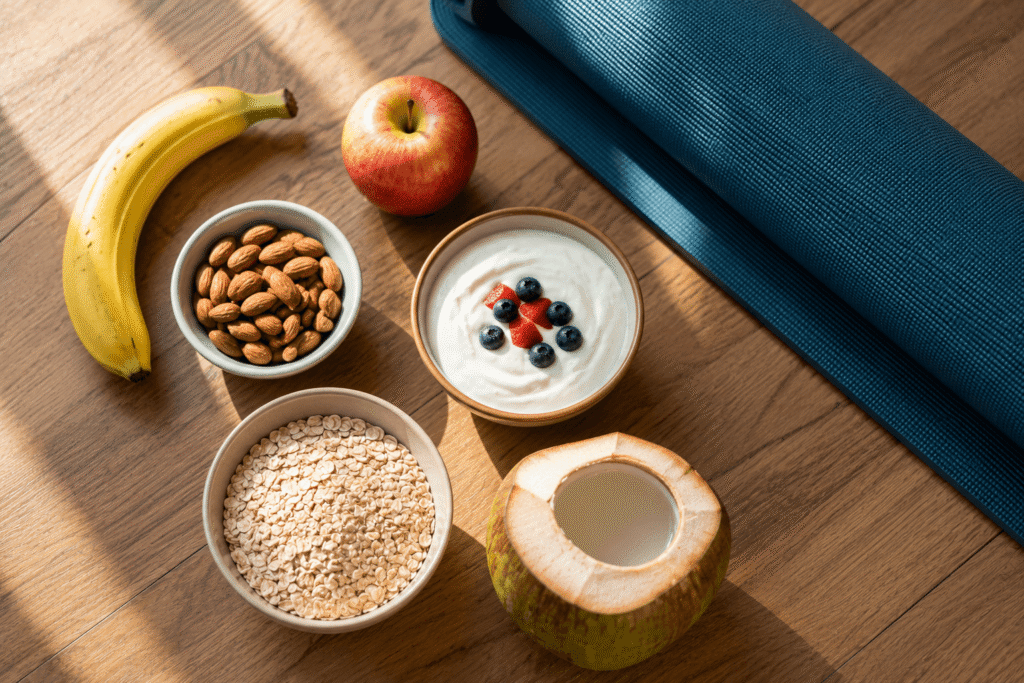
Choose foods that are light, easy to digest, and provide steady energy.
Fruits
- Banana
- Apple
- Orange
- Papaya
- Berries
These provide natural carbohydrates for quick energy.
Whole Grains
- Oats
- Whole-grain toast
- Plain crackers
These release energy gradually.
Yogurt
Plain yogurt with fruit offers protein and carbohydrates without feeling too heavy.
Nuts
A small handful of almonds or walnuts provides healthy fats and lasting energy.
Smoothies
A light fruit smoothie with yogurt or milk is an excellent option before yoga.
Foods to Avoid Before Yoga
Avoid foods that may cause discomfort during practice.
Examples include:
- Fried foods
- Fast food
- Heavy curries
- Sugary desserts
- Large portions
- Carbonated drinks
- Excessive caffeine
These foods may lead to bloating or reduced comfort during yoga poses.
What to Eat After Yoga
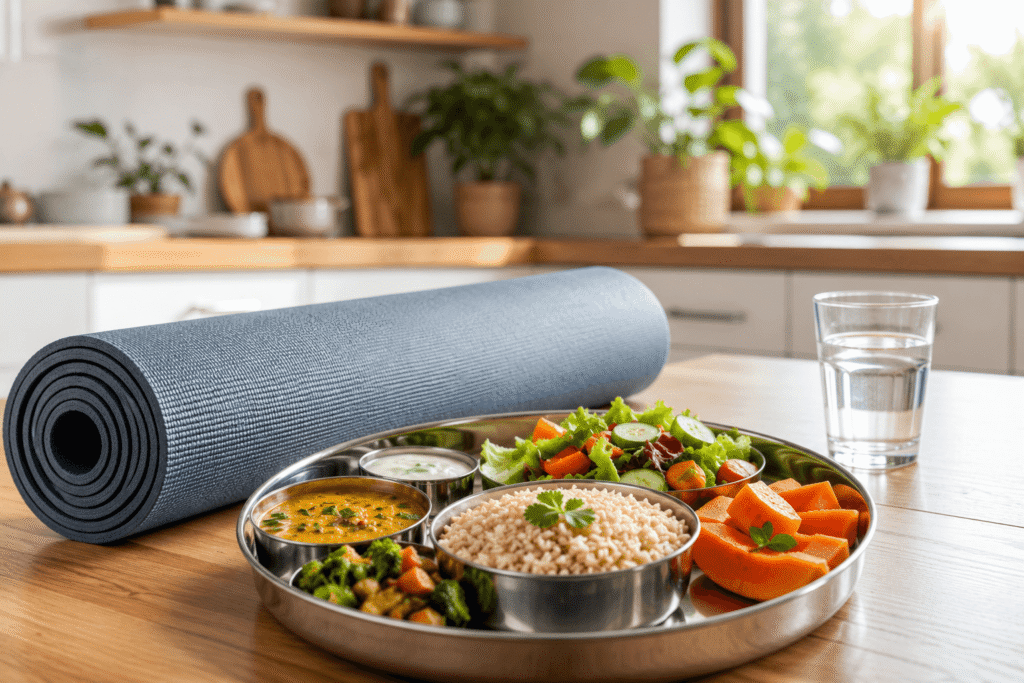
After yoga, your body benefits from nutrients that help replenish energy and support muscle recovery.
Aim to eat within 30–60 minutes after your session.
A balanced meal should include:
- Protein
- Healthy carbohydrates
- Fruits or vegetables
- Plenty of water
Healthy Post-Yoga Meal Ideas
Here are simple meal ideas for beginners.
If you’re unsure when to practice, read Best Time to Do Yoga: Morning vs Evening for Beginners.
Breakfast
- Oatmeal with banana and nuts
- Vegetable upma
- Idly with sambar
- Whole-grain toast with peanut butter
Lunch
- Brown rice with vegetables and dal
- Grilled paneer with salad
- Quinoa and vegetables
- Chapati with vegetable curry
Snacks
- Greek yogurt
- Fruit salad
- Boiled chickpeas
- Mixed nuts
Dinner
- Vegetable soup
- Lentil curry with chapati
- Grilled vegetables with tofu
- Khichdi with vegetables
Don’t Forget Hydration
Hydration is just as important as food.
Drink water:
- Before yoga
- After yoga
- Throughout the day
If you sweat heavily, consider coconut water after practice to replace natural electrolytes.
Avoid drinking large amounts of water during yoga unless needed.
Sample Pre- and Post-Yoga Meal Plan
Morning Yoga
Before
- Water
- Banana
After
- Oats with fruit
- Boiled eggs or paneer
- Herbal tea
Evening Yoga
Before
- Apple
- Handful of almonds
After
- Chapati
- Dal
- Mixed vegetables
Pair healthy nutrition with How Long Should You Hold Each Yoga Pose? to improve your practice.
Tips for Eating Around Your Yoga Practice
- Eat according to your hunger level.
- Avoid overeating before class.
- Choose fresh, whole foods whenever possible.
- Drink enough water daily.
- Listen to your body.
- Everyone digests food differently, so adjust timing based on what feels comfortable.
Consistency with healthy eating and regular yoga often produces better results than following restrictive diets.
Final Thoughts
The best foods before and after yoga are simple, nutritious, and easy to digest. A light snack before practice provides energy, while a balanced meal afterward helps your body recover and stay healthy.
Remember that there isn’t one perfect meal for everyone. Experiment with healthy foods, stay hydrated, and choose meals that make you feel energized rather than heavy. Combining mindful eating with regular yoga practice can help you build lasting habits for better physical and mental well-being.
Frequently Asked Questions (FAQ)
What should I eat 30 minutes before yoga?
A banana, apple, yogurt, or a small smoothie are excellent light options before yoga.
Can I do yoga on an empty stomach?
Yes. Many people enjoy practicing yoga on an empty stomach, especially in the morning. However, if you feel weak or dizzy, have a light snack first.
What should I eat after yoga for recovery?
Choose a balanced meal with protein, healthy carbohydrates, vegetables, and water. Examples include oats with fruit, dal and rice, or grilled paneer with salad.
Is coffee okay before yoga?
A small cup may be fine for some people, but excessive caffeine can cause dehydration or restlessness.
How long should I wait after eating before doing yoga?
Wait about 2–3 hours after a full meal and 30–60 minutes after a light snack.