
Do you often feel tightness in your neck and shoulders after sitting at a desk, using your phone, driving, or spending a long day working?
You’re not alone. Long periods in the same position, poor posture, stress, and limited movement can contribute to neck and shoulder stiffness. Regular gentle movement and changing positions throughout the day can help keep the neck moving and reduce stiffness.
Yoga can be a simple way to bring gentle movement, stretching, breathing, and body awareness into your daily routine.
In this guide, you’ll learn 8 gentle yoga poses for neck and shoulder tension that are suitable for beginners. You can practice them at home without needing a complicated yoga setup.
If you spend a lot of time sitting or looking at a screen, practicing yoga for better posture may also help you become more aware of how you hold your head, neck, and shoulders.
Important: Yoga should feel gentle and comfortable. Do not force your neck into a stretch or continue an exercise if it causes pain. If you have an injury, severe neck pain, numbness, weakness, or other concerning symptoms, speak with a healthcare professional before exercising.
Can Yoga Help With Neck and Shoulder Tension?
Gentle yoga may help you become more aware of tension in your neck and shoulders while encouraging comfortable movement and relaxation.
Many people spend hours with their head and shoulders in one position while working at a computer or looking down at a phone. Regularly changing position and keeping the neck moving can help prevent stiffness associated with prolonged static positions.
Gentle yoga also combines movement with breathing, which can make it easier to slow down and relax during your practice.
The goal isn’t to stretch as deeply as possible.
Instead, focus on:
- Slow, controlled movements
- Relaxed breathing
- Comfortable range of motion
- Keeping your shoulders relaxed
- Maintaining good posture
- Listening to your body
Cleveland Clinic also recommends gentle neck and shoulder movements and emphasizes staying within a comfortable range rather than forcing a stretch
If you’re completely new to yoga, start with this guide on how to start yoga at home for beginners.
8 Gentle Yoga Poses for Neck and Shoulder Tension
1. Gentle Neck Side Stretch
This simple stretch is a good place to begin if your neck feels tight.
How to do it:
- Sit comfortably with your spine tall.
- Relax both shoulders away from your ears.
- Slowly bring your right ear toward your right shoulder.
- Keep your left shoulder relaxed.
- Take 3–5 slow breaths.
- Return your head to the center.
- Repeat on the other side.
Beginner tip:
Don’t pull your head down with your hand. Let the weight of your head create a gentle stretch.
You should feel mild stretching, not pain.
2. Gentle Neck Turn
This movement can help you explore comfortable neck rotation.
How to do it:
- Sit or stand comfortably.
- Keep your shoulders relaxed.
- Slowly turn your head to look toward your right shoulder.
- Stop when you feel a gentle stretch.
- Hold for 1–3 breaths.
- Return to the center.
- Slowly turn toward your left shoulder.
- Repeat 3 times on each side.
Move slowly rather than trying to turn as far as possible.
Gentle head turns are commonly recommended as part of comfortable neck mobility exercises.
3. Shoulder Rolls
Shoulder rolls are one of the easiest ways to add movement when your shoulders feel stiff after sitting.
How to do it:
- Sit or stand tall.
- Let your arms rest naturally.
- Slowly lift your shoulders toward your ears.
- Move them gently backward.
- Then lower them down.
- Continue making slow circles.
- Repeat 5 times.
- Reverse the direction for another 5 repetitions.
Breathing:
Inhale as you lift your shoulders.
Exhale as you relax them down.
Try not to rush the movement.
4. Cat-Cow Pose
Cat-Cow is a gentle movement for the spine and upper body and can help you coordinate movement with your breath.
How to do it:
- Come onto your hands and knees.
- Place your hands under your shoulders.
- Place your knees under your hips.
- Inhale and gently lift your chest while lengthening your spine.
- Exhale and slowly round your back.
- Move your head naturally with your spine.
- Continue for 5–8 slow repetitions.
Beginner tip:
Don’t drop your head heavily during the movement.
Keep your neck comfortable and let your spine guide the movement.
If being on your hands and knees is uncomfortable, you can practice a similar spinal movement while seated.
5. Child’s Pose
Child’s Pose can be a calming position to include in a gentle yoga routine.
How to do it:
- Start on your hands and knees.
- Slowly move your hips toward your heels.
- Extend your arms forward or rest them beside your body.
- Let your forehead move toward the mat if comfortable.
- Relax your shoulders.
- Breathe slowly for 5–8 breaths.
Modification:
If your forehead doesn’t comfortably reach the floor, place a folded towel, blanket, or yoga block underneath it.
Yoga props can provide additional comfort and support when a pose feels difficult to access.
6. Sphinx Pose
Sphinx Pose gently opens the front of the chest while encouraging awareness of the upper back and shoulders.
How to do it:
- Lie on your stomach.
- Place your forearms on the mat.
- Keep your elbows underneath or slightly in front of your shoulders.
- Gently lift your chest.
- Keep your shoulders away from your ears.
- Look forward without lifting your chin too high.
- Take 5 slow breaths.
Beginner tip:
You don’t need to lift your chest very high.
The goal is comfortable movement, not a deep back bend.
If you feel pressure or pain in your lower back or neck, come out of the pose.
7. Seated Side Bend
A gentle side bend can create space through the side body and upper torso while encouraging relaxed shoulder movement.
How to do it:
- Sit comfortably on a chair or on the floor.
- Keep your spine tall.
- Place your right hand beside you.
- Raise your left arm overhead.
- Slowly lean toward the right.
- Keep both shoulders relaxed.
- Take 3–5 slow breaths.
- Return to the center.
- Repeat on the opposite side.
Keep the movement gentle and avoid collapsing your chest forward.
8. Supported Mountain Pose
Mountain Pose is a simple standing position that can help you practice relaxed alignment and body awareness.
How to do it:
- Stand with your feet about hip-width apart.
- Keep your knees soft rather than locked.
- Let your arms rest beside your body.
- Relax your shoulders.
- Keep your chin level with the floor.
- Lengthen through the crown of your head.
- Take 5–8 slow breaths.
Think about creating length through your spine without forcing your body into a rigid position.
Mountain Pose is also a useful foundational posture for beginners learning basic yoga alignment.
Simple 10-Minute Yoga Routine for Neck and Shoulder Tension
You don’t need a long yoga session to get started.
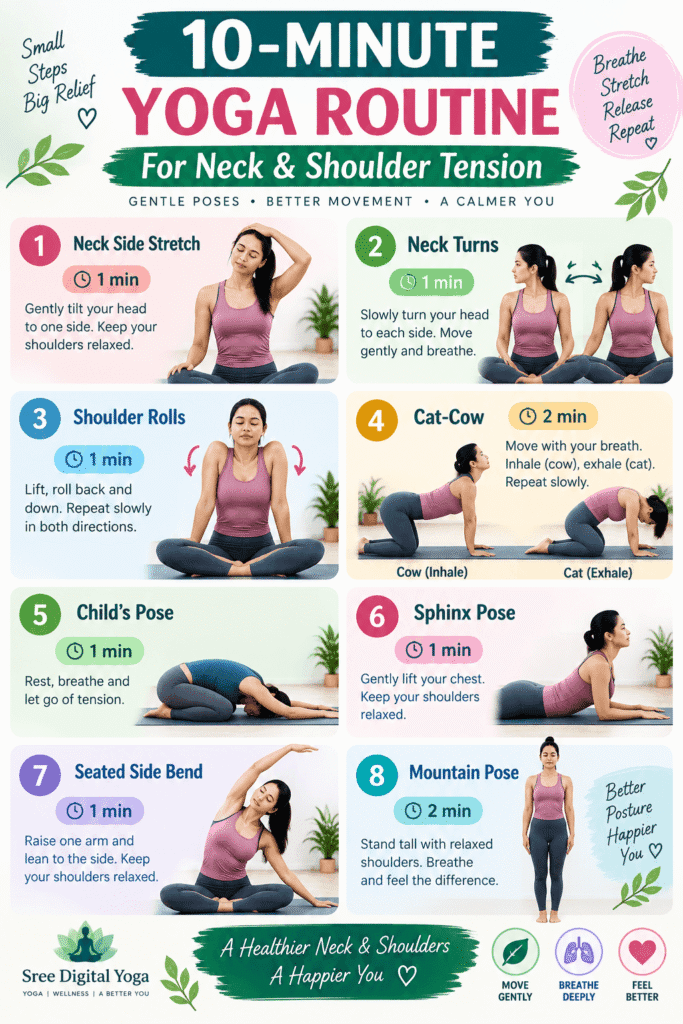
Try this gentle 10-minute beginner routine:
| Exercise | Time |
|---|---|
| Gentle Neck Side Stretch | 1 minute |
| Gentle Neck Turns | 1 minute |
| Shoulder Rolls | 1 minute |
| Cat-Cow | 2 minutes |
| Child’s Pose | 1 minute |
| Sphinx Pose | 1 minute |
| Seated Side Bend | 1 minute |
| Supported Mountain Pose | 2 minutes |
How to practice:
Move slowly from one exercise to the next.
Keep your breathing relaxed and avoid trying to make every stretch deeper.
If a particular movement doesn’t feel comfortable, skip it and continue with another gentle movement.
A short, consistent practice can be easier to maintain than trying to do a long session occasionally. Cleveland Clinic’s beginner guidance also emphasizes starting gently, moving at your own pace, and using modifications when needed.
Tips for Preventing Neck and Shoulder Tightness
Yoga is only one part of taking care of your neck and shoulders.
If you spend a lot of time sitting, try these simple habits throughout your day.
1. Change positions regularly
Avoid staying in exactly the same position for long periods.
Get up, walk around, or gently move your shoulders and neck.
2. Pay attention to your sitting posture
Try to keep your head and neck comfortable rather than constantly leaning forward.
3. Relax your shoulders
Many people unconsciously lift their shoulders when stressed.
Every so often, take a slow breath and let your shoulders drop.
4. Take screen breaks
If you spend hours looking at a phone or computer, take regular breaks and change your position.
5. Keep your movements gentle
You don’t need aggressive stretching to improve mobility.
Gentle, regular movement is often a better approach than forcing a stiff area.
How Often Should You Do These Yoga Poses?
You can practice this gentle routine several times a week, depending on how your body feels.
If you’re a beginner, start with 5–10 minutes and gradually build your practice.
You don’t have to perform all eight poses every time.
For example, if you only have five minutes, you could practice:
- Shoulder rolls
- Gentle neck turns
- Cat-Cow
- Seated side bends
- Mountain Pose
The most important thing is to practice within a comfortable range and avoid pushing through pain.
When Should You Avoid Yoga for Neck Pain?
Gentle movement may be appropriate for ordinary stiffness, but yoga isn’t suitable for every type of neck pain.
Stop exercising and seek medical advice if you experience symptoms such as:
- Severe or worsening neck pain
- Numbness or tingling
- Weakness in your arm or hand
- Problems with balance or coordination
- Symptoms that started after a significant injury
- Pain that doesn’t improve or keeps returning
The NHS recommends seeking medical advice when neck pain persists or is accompanied by symptoms such as pins and needles or a cold arm. Certain neurological symptoms or pain following trauma require more urgent assessment.
If you already have a diagnosed neck condition or injury, ask your doctor or physiotherapist whether these movements are appropriate for you.
Stress can also contribute to feelings of physical tension, so you may enjoy our guide to yoga for stress and anxiety relief.
Frequently Asked Questions
Can yoga help with neck and shoulder tension?
Gentle yoga may help improve comfortable movement, flexibility, relaxation, and body awareness. It should be practiced gently and should not cause pain.
Which yoga pose is best for tight shoulders?
Simple movements such as shoulder rolls, seated side bends, and gentle chest-opening movements can be useful starting points. The best option depends on what feels comfortable for your body.
Is yoga good for a stiff neck?
Gentle neck movements and yoga may help maintain comfortable movement when stiffness is caused by common factors such as prolonged positions or muscle tension. However, persistent or severe neck pain should be evaluated by a healthcare professional.
How long should I do yoga for neck and shoulder tension?
Beginners can start with 5–10 minutes of gentle movement. You can gradually increase the length of your practice as you become more comfortable.
Can I do these yoga poses at home?
Yes. Most of these poses require only a comfortable space and a yoga mat. Some can even be practiced on a chair.
Should yoga stretches hurt?
No. You may notice a gentle stretch or mild tension, but you should not force a movement or continue if you feel pain. Gentle, controlled movement is more important than stretching as deeply as possible.
Final Thoughts
Neck and shoulder tension can become part of everyday life, especially when we spend long periods sitting, using screens, or holding the body in the same position.
A few minutes of gentle yoga can give you an opportunity to move, breathe, and become more aware of how your neck and shoulders feel.
Start slowly with these 8 gentle yoga poses for neck and shoulder tension, and focus on comfortable movement rather than perfect poses.
Even a simple 10-minute routine can be a practical way to bring more movement into your day.
Listen to your body, breathe naturally, and remember that yoga is not about forcing flexibility.
Move gently. Breathe deeply. Practice consistently. 🌿